
Arrest Warrants in Graham County
Arizona's court guidance keeps three orders distinct: an arrest warrant, a search warrant, and a bench warrant. The arrest kind starts with paperwork. A peace officer or a prosecutor brings a sworn complaint or affidavit to a magistrate. Graham County's magistrate then weighs probable cause. The judge must believe both that an offense happened and that the named person committed it before signing the arrest order. Which court takes the case depends on the charge. The Superior Court of Arizona in Graham County handles felonies after the limited-jurisdiction stage. Graham County Justice Court covers misdemeanors, criminal traffic, and felony initial appearances and preliminary hearings. Gila Valley Consolidated Municipal Court, or GVC, handles Safford, Thatcher, and Pima ordinance, petty-offense, misdemeanor, and city traffic cases. Once signed, the order directs officers to arrest.
Checking a Graham County Arrest Warrant Through DPS
The Arizona Department of Public Safety Warrant Search is the broadest public entry point for a Graham County warrant check. It asks for a first name, last name, and date of birth, and it returns no more than five matches. The listing may even name the court tied to the case. Enter full legal data. Common names and incomplete fields can point to the wrong case.
First and last name
Date of birth
Find the named court
Confirm with that clerk
DPS warns that its data is not real-time, complete, or a promise that a warrant is still active. A blank result is not clearance. A shown result is not final status either. Save the court and case details from a Graham County result, then call the issuing clerk.
What a Graham County Arrest Warrant Contains
Public-facing entries can list the court, case, subject, alleged offense, warrant type, issue date, and any bond direction. The number tells you less. Graham County has published no universal arrest-warrant number format, so a prefix proves nothing about status. Superior payment records use an S-0500-CR family, and Justice records may carry legacy JP-0501 or S-0502 references. Treat those as case prefixes only. They promise no warrant-number pattern.
| Record identifier | Case or citation number; no public countywide warrant-number format is documented |
|---|---|
| Named subject | Full legal name and identifying details such as date of birth |
| Charge or offense | Alleged statute, violation, and felony or misdemeanor context |
| Issuing court | Superior Court, Graham County Justice Court, or GVC Municipal Court |
| Bond | Amount and type, if the judge has set release terms |
| Status and date | Issue date and court-maintained status, subject to clerk confirmation |
Why Graham County Arrest Warrant Records Can Be Partial
Arizona Public Access can find a case in a participating court, but its notices spell out exclusions and periodic updates. It is a research aid, not a warrant confirmation. Arizona Supreme Court Rule 123 restricts remote public access to warrants and bench warrants. Sealed material and juvenile information may also be missing. A.R.S. § 8-208 adds its own limits on juvenile records. The Arizona Public Access case lookup builds case history for Graham County matters, not active-warrant status. Superior Court eAccess can supply eligible documents. Sealed or confidential files stay unavailable. When the online trail goes cold in Graham County, call the record keeper: the Clerk of the Superior Court for Superior matters, the Justice Court clerk for county cases, or the GVC clerk for city cases.
How Graham County Arrest Warrants Are Served
The Graham County Sheriff's Office and city police can both execute a valid warrant. Contact can start anywhere. Officers may act after direct contact, a traffic stop, or another lawful encounter. A.R.S. § 13-3887 governs an officer's duties during an arrest by warrant. Service settles nothing. The issuing court, not the serving agency, decides whether the warrant was quashed or recalled. Booking may occur at Graham County Adult Detention. Arizona court guidance requires the person to be brought before a judicial officer within its stated period, and the judge takes up release terms and bond. For custody and after-hours bond logistics, the detention line is 928-428-2455. That line cannot replace asking the issuing clerk whether the warrant is active.
Graham County Sheriff Records and Court Confirmation
The Graham County Sheriff's Office posts no public arrest-warrant roster. Records requests go through the office at 600 W. Graham Canal Road in Safford, or by phone at 928-428-3141. The public-record request form warns that processing may take up to ten days. A response documents agency material only. The court, not the sheriff, confirms judicial status. Pima's official municipal-court page lists GVC contact, payment, and consolidation details.
That official page confirms a Pima warrant question goes to GVC, the consolidated Graham County court based in Safford. There is no Pima warrant lookup. The Safford Police's official page gives public contact details without any warrant roster.
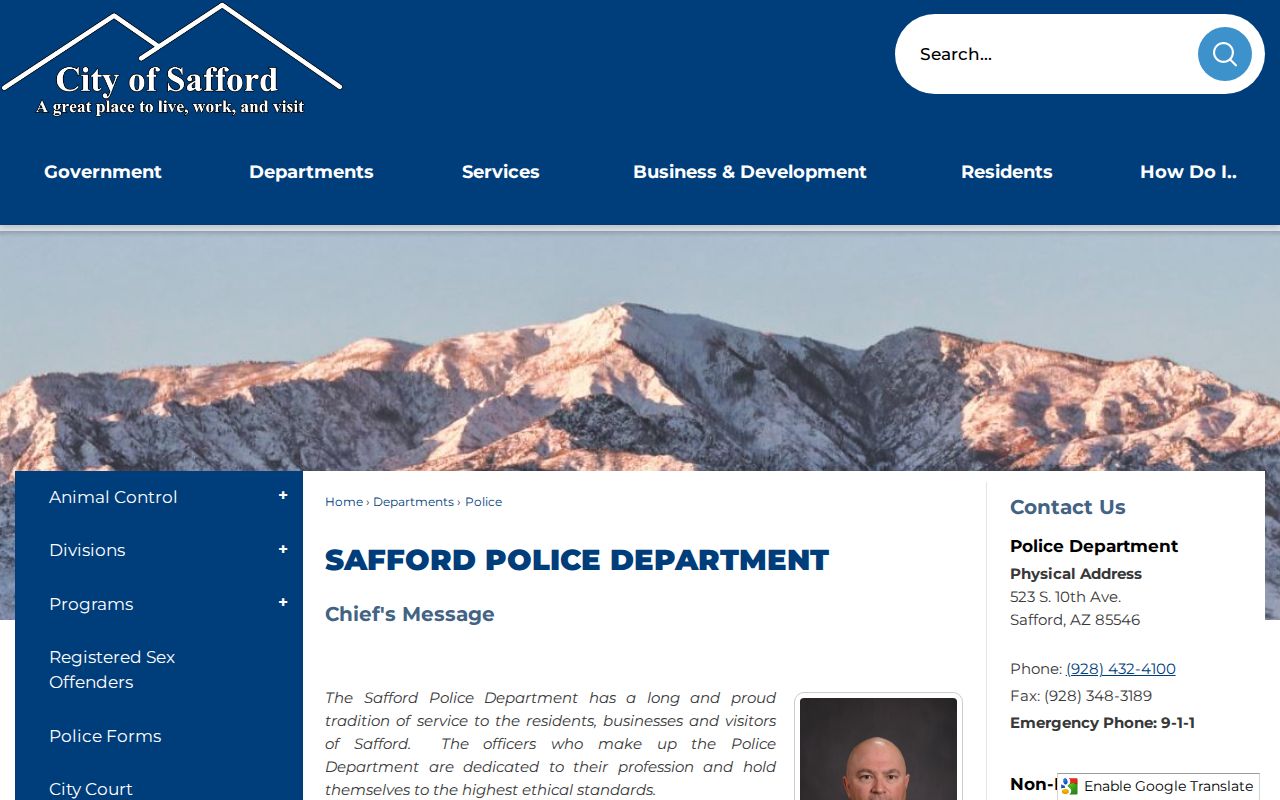
Safford officers may serve a warrant in Graham County, yet the issuing court still owns its current status. Service is not closure. The city's Police Records page maps the separate agency-record route.
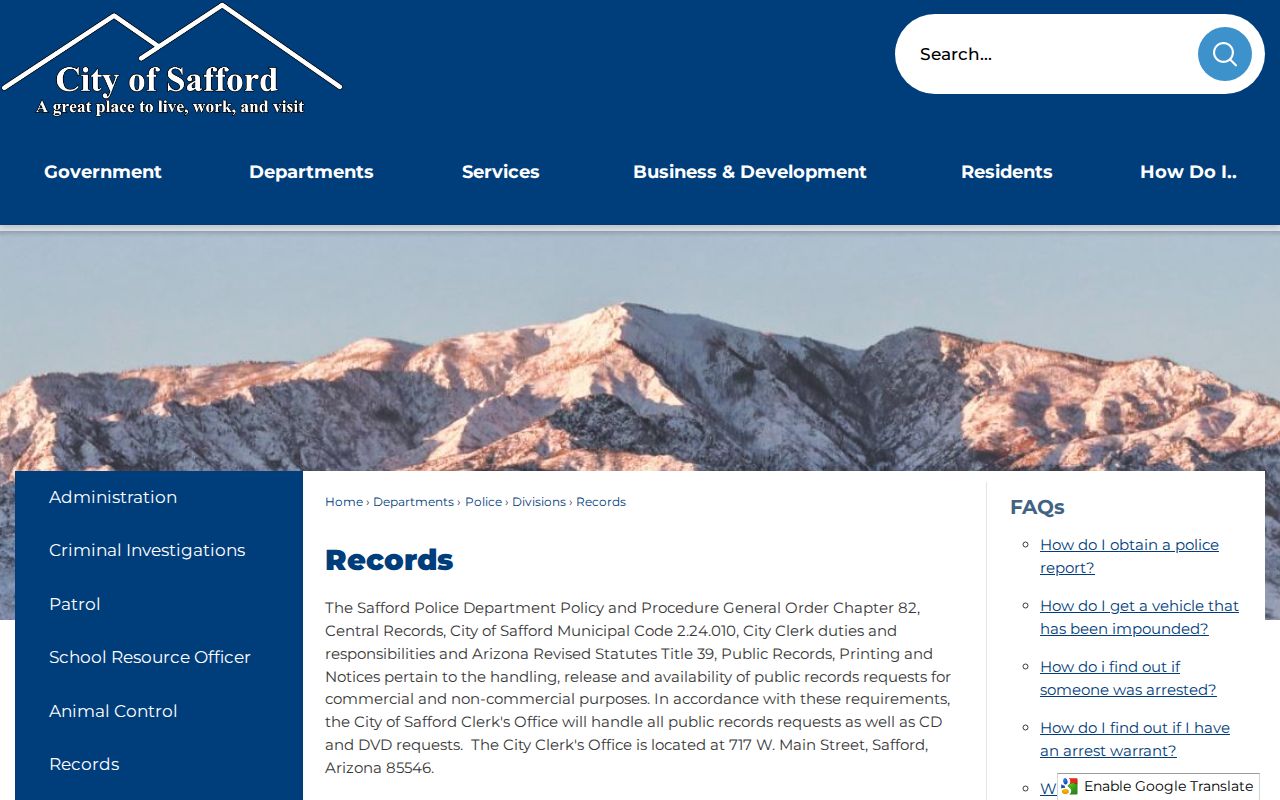
The records counter can hand over eligible police records. It cannot replace a court's confirmation or recall order. The official Sheriff's Office page carries the verified contact route. For felony court records, the Clerk of the Superior Court sits at 800 W. Main Street, reachable at 928-428-3100. Graham County Justice Court uses 928-428-1210, with 928-485-2771 kept for legacy Pima/JP2 routing. GVC uses 928-432-4090. When you call, ask for the warrant type, exact status, bond, next setting, and any steps required before appearing.
Graham County Arrest Warrant vs Summons vs Bench Warrant
Three tools, three different jobs. An arrest warrant puts a person in custody once police find probable cause. A summons simply orders the person to show up in court, with no arrest on the spot. Skip a hearing or break a court order, though, and a bench warrant usually follows. Official Graham County and Arizona materials say “bench warrant,” “arrest warrant,” and “failure to appear” rather than capias or capias pro fine.
| Feature | Arrest Warrant | Summons | Bench Warrant |
|---|---|---|---|
| What it orders | Arrest | Appear as directed | Arrest for missed duty |
| Basis | Probable cause | Formal notice | Failure to appear or comply |
| Issuer | Judge or magistrate | Court process | Issuing judge |
| Response | Counsel, surrender, bond | Appear on date | Ask court about recall |
Bond After a Graham County Arrest Warrant
Bond exists to make sure a person comes back to court. The judge sets the amount based on the charge. Graham Justice Court guidance allows anyone to post a cash bond, while a bail-bond company may post a paper bond instead. Own-recognizance or third-party release happens only when the court orders it. Keep in mind that a published traffic bond schedule does not double as a general arrest-warrant bond schedule. Weekdays are simplest. During business hours, post bond at the proper court. On weekends, holidays, and after hours, Graham County detention takes money orders only, and it refuses personal checks. If the judge has not yet seen the defendant, the person posting bond must contact the court within ten calendar days to set an arraignment. Miss that step and the money may be forfeited. Hold on to the receipt, and confirm the next court date before leaving.
What to Do About a Graham County Arrest Warrant
Start by saving the DPS result or case number. Then call the issuing court in Graham County. Ask whether the warrant is active, what type it is, what bond applies, and whether the judge requires a personal appearance. A lawyer can deal with the prosecutor, set up a surrender or walk-through, handle bond, or file the right request with the court. In the end, only a judicial officer in the jurisdiction that issued the warrant can quash or cancel it.
- Confirm the court and case using full identifying information.
- Ask the clerk what appearance, bond, or motion the judge requires.
- Gather photo ID, court papers, proof of compliance, and an accepted payment method.
- Obtain a receipt, order, or docket confirmation and note the next hearing.
Important: Speak with a lawyer before surrendering; an active warrant can lead to arrest during any lawful contact with police.
Safe Payment Checks for Graham County Arrest Warrants
The Graham County Sheriff's Office issued a warning in October 2024. Callers were claiming a jury-duty arrest warrant existed and demanding Bitcoin or another payment. The sheriff was blunt: law enforcement does not demand payment by phone that way. Hang up, share no financial data, and verify any claim through an official number you look up yourself.
Warning: A real warrant must be checked with the named court; an urgent phone demand for cryptocurrency is a scam signal.
Pay only through the official court route, and only after the clerk confirms the case. Money, bond, and warrant recall are not the same thing. Ask whether a payment just settles a balance, secures release, or works alongside a judge's order. The Graham County warrant records overview walks through the court-first clearing sequence.